
Competing in Europe, Connecting Next Door



By Amer Kapetanović, Secretary General of the Regional Cooperation Council (RCC)
Exclusive for Monitor magazine
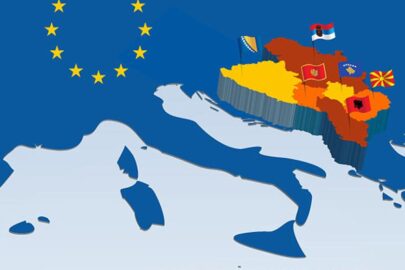
The EU Growth Plan adds weight to the convergence process by linking gradual access to the EU Single Market with progress on regional integration. Building our regional market is not an alternative to Europe, but part of the road there.
A company in the Western Balkans Six (WB6) can manufacture components for a major European car producer, meet strict international standards and deliver its products thousands of kilometres away. Yet that same company may face unnecessary barriers when trying to expand its business just a few hundred kilometres away, in a neighbouring economy.
This is one of the paradoxes of our region. Our businesses have demonstrated that they can compete internationally. What we need is to make it easier for them to do business with each other. Our Balkan Barometer shows the gap: seven in ten companies say removing trade barriers matters for regional trade, yet only 6% hire workers from neighbouring economies.
Individually, the six Western Balkans economies are relatively small. Jointly, they constitute a market of nearly 17 million people. For businesses, that means more potential customers, a larger pool of skilled workers, more suppliers and greater opportunities to invest. For investors, it means serving a larger market through connected regional operations.
This is the economic logic behind the Common Regional Market: giving businesses more room to grow, helping them become more competitive and bringing the region closer to the EU Single Market.
The Potential
Individually, the six Western Balkans economies are relatively small. Jointly, they constitute a market of nearly 17 million people. For businesses, that means more potential customers, a larger pool of skilled workers, more suppliers and greater opportunities to invest. For investors, it means serving a larger market through connected regional operations. This is the economic logic behind the Common Regional Market: giving businesses more room to grow, helping them become more competitive and bringing the region closer to the EU Single Market.
From supplying Europe to creating more value
Our region is already closely connected to the European economy. In 2025, trade in goods between the region and the EU reached approximately EUR 88 billion, while close to 70% of our goods exports went to the EU market.
These are encouraging figures, but they tell only part of the story. Equally important is what we produce, how we produce it and how much value our companies capture.
Many WB6 businesses are already part of European supply chains, particularly in automotive components, metal processing, machinery and other manufacturing. The next challenge is to move into more sophisticated production, develop our own products and technologies, and compete in higher-value segments.
Regional cooperation can help us get there.
Recently, in Pristina, at the Civil Society Forum with the inspiring title “Proofs, not Promises”, a young man from the audience confronted me with a challenging question: What would it take for the Balkans to have its own Airbus? But we should read Airbus correctly, both in metaphorical and practical sense. It did not begin as a champion. It began as a consortium through which existing French and German firms pooled their work on one aircraft while remaining separate companies. It took some thirty years before Airbus became a single company. So, the lesson for our region is not to build a giant. It is to make it legally, financially and technically easy for our firms to bid together. Imagine an automotive supplier in one economy, an electronics producer in another and an engineering company elsewhere in the region competing jointly for contracts none of them could win alone. The ambition is there. What stops them is the plumbing.
A component certified in one economy should be accepted in the next. Inputs from across the region should count as origin when the final product reaches the European market. Small firms need a simple cross-border/boundary form for joint bids and access to guarantees. Engineers need to move as easily as parts. None of this is glamorous. All of it is what the Common Regional Market was designed to deliver. The Balkans will not get its Airbus by announcing one. It will get there through the first regional consortium that wins a contract it could not have secured alone. That is proof, not a promise.
This is the idea behind the WB6-EU Industrial Parks Partnership, which we launched in September, connecting seven industrial parks and business zones from the WB6 with EU partners. Our aim is to build supplier networks and value chains, and to encourage the exchange of technologies and greener industrial practices.
We want these connections to lead to new investments. Companies interested in joining, as suppliers or partners, are welcome to contact us.
WB6-EU Industrial Parks Partnership
This is the idea behind the WB6-EU Industrial Parks Partnership, which we launched in September, connecting seven industrial parks and business zones from the WB6 with EU partners. Our aim is to build supplier networks and value chains, and to encourage the exchange of technologies and greener industrial practices.
We want these connections to lead to new investments. Companies interested in joining, as suppliers or partners, are welcome to contact us.
Making the regional market work for businesses
Companies cannot take full advantage of a larger market if operating across the region remains complicated and costly.
A manufacturer needs predictable delivery times. A technology company needs access to skilled workers. An investor needs transparent procedures and confidence that regional operations will run efficiently.
Yet, businesses still face administrative requirements, regulatory differences, transport delays and difficulties accessing finance. These hurdles add costs and discourage investment.
We have already demonstrated what regional cooperation can deliver. The abolition of regional roaming charges, SEPA accession making payments cheaper and faster, Green Lanes shortening waiting times at borders and easier recognition of professional qualifications are practical examples.
The second iteration of the Common Regional Market provides the framework to take this work further.
At the Regional Cooperation Council, we work with the WB6, the European Commission and regional partners to turn political commitments into practical results, from simpler investment procedures and green investment incentives to sustainable finance. For this October Leaders’ Summit, under Montenegro’s Berlin Process Presidency, we are preparing new regional deliverables for leaders to endorse.
We also need to hear from business: companies know best where obstacles remain, and our monitoring of the Common Regional Market is designed to capture that.
The objective is straightforward: make it easier and more attractive to invest, operate and grow across the region.
Ten years from now
As Monitor prepares its ranking of the largest companies in the region, it is worth asking what that ranking should look like ten years from now. How many of our leading companies will operate across several economies? How many will have developed regional supplier networks, their own technologies or internationally recognised brands? We need more such companies.
Building the next generation of regional champions
As Monitor prepares its ranking of the largest companies in the region, it is worth asking what that ranking should look like ten years from now.
How many of our leading companies will operate across several economies? How many will have developed regional supplier networks, their own technologies or internationally recognised brands?
We need more such companies.
Strong regional businesses can bring smaller suppliers into wider production networks, invest in innovation, create better-paid jobs and attract international partners.
But size alone is not enough. Our ambition must be to develop more productive, innovative and internationally competitive companies.
And there is good reason to act with urgency.
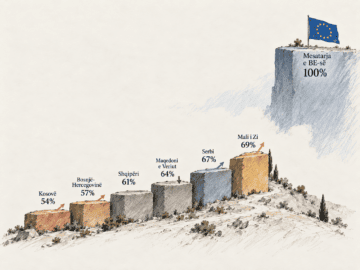
According to the latest Converge2EU dashboard, the region remains between 30 and 60 years away from reaching EU standards of living if current trends continue. The gap extends well beyond income, to education, healthcare and infrastructure.
We need to shorten that journey, and stronger regional businesses, higher productivity and deeper integration can help.
The EU Growth Plan adds weight by linking gradual access to the EU Single Market with progress on regional integration. Building our regional market is not an alternative to Europe, but part of the road there.
We have a shared framework, clear direction and businesses capable of competing internationally. What matters now is the speed at which we deliver.
Our businesses should be able to grow across the region as naturally as they grow within their domestic markets. And our next generation of business champions should be defined by the markets they can reach, the products they can develop and the value they can create.
That is the regional market we should be building, and we better be fast. Walking the talk and keeping promises is not enough anymore. We have to run with them.
Click here to register for free and access the 2025 ranking of the largest companies in the Balkans
Monitor Special Edition | Ranking the Largest Companies in the Western Balkans in 2025
Ky është artikull ekskluziv i Revistës Monitor, që gëzon të drejtën e autorësisë sipas Ligjit Nr. 35/2016, “Për të drejtat e autorit dhe të drejtat e lidhura me to”.
Artikulli mund të ripublikohet nga mediat e tjera vetëm duke cituar “Revista Monitor” shoqëruar me linkun e artikullit origjinal.